
How to Keep them Motivated with their Music Studies (especially during the holidays!)


The longest school holiday break of the year is upon us! We are enjoying the sunshine, beach days, time away from the school books and a change in routine. Many instrumental music teachers are on holidays and rejuvenating for a new year ahead! So how do you keep the young people in your life motivated to maintain their music studies?
Music is a popular leisure activity for children and adolescents {1}. Music is also a perfect activity to undertake during school holiday periods. Families can encourage musical practice, activities and goals over the holidays. This will give their young artists a head start on the new year! Music is a fun thing to do during the summer break and will keep them energised for the year ahead.
Although young people sample many activities through their primary and secondary school years, the benefits of music are immense. As a parent, guardian or teacher, you’ve made a significant investment in their musical education. However, there are critical periods in an adolescent’s life where they are more likely to drop-out of learning music. Undertaking music during the holidays keeps them primed to survive this period.
The benefits of music
Making music with others helps young people cope with issues that occur while growing up. Music is therefore an activity worthy of pursuit and investment.
Studies have shown that engaging with music improves a child’s self-regulation. This is an essential skill required to persist with challenging tasks, managing difficult emotions and delaying gratification.
Children in a European study stated that of their reasons to learn music, the key reasons were “having fun, being creative, and doing something meaningful for leisure” {2}.
Your investment in their music really makes a difference!
The positive effects of learning music are so important to a childs’ development. That’s a strong motivator to help them to pursue the highest level of musical literacy they can attain. Learning music will prime their development so that other aspects of academic life are more accessible.
The support of parents is crucial for children’s motivation and growth. Everything you do to help them stay connected to music, is worth the investment.
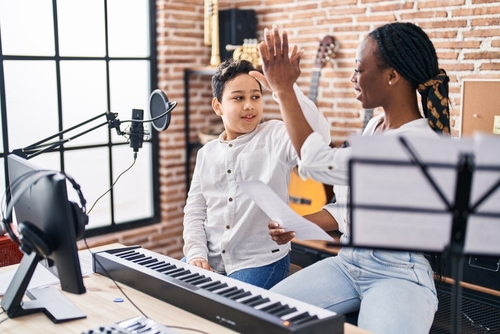
everything you do to help them stay connected to music, is worth the investment
Research also tells us that there is a strong association between parental support and the length of time they spend playing music {3}. Parents are the most important factor for children’s musical engagement. Parents don’t have to be musical themselves, but providing musical support in the home environment makes a difference. The relationship with their music teachers also strongly contributes to continuing their music education {4}.
What you do matters and shapes their musical lives! Even if you don’t feel qualified, or are not musical yourself, there are still many ways to engage and create a meaningful musical environment.
How to keep music students motivated over the break?
But how do you keep young musicians engaged and motivated to play music during the break?
There is good reason to ask this question. A 2021, UK based study, showed that the drop-out rate for music students are highest for the ages 15-17 years. And particularly for boys, interest in playing their musical instrument declines steadily from the start of high school.
In an Australian Study of 157 music school students also {5} found that children have a high risk of dropping out of music during the transition from primary to secondary school. When they reach high school musical engagement drops each year from Year 7 to Year 12.
We know that regular practice helps keep their knowledge fresh and makes returning to study music easier in the new school year. So how do you keep them motivated and inspire them to keep practicing over the holidays? Motivating them can feel like a monumental task, especially when there are many activities that compete with music time. You may feel ill-equipt to direct young musicians without regular music lessons and school bands to offer structure.
Here are some factors that will help them stay motivated and on-track:
Expectations
One of the few longitudinal studies on musical engagement in students showed that the child’s expectation of being able to learn an instrument was key to persistence {5}. This is a good moment to check in with your young musician. Ask them how capable they feel and how accessible learning music appears to them. Does your child or student have any doubts about their ability to learn music? Do they worry it’s too hard? Or do they feel it might not be as socially acceptable to their peers to be worth pursuing? If this is the case then reassurance is the best place to start.
You can engage them with stories about people who learned music against the odds. Take the time to reassure them that they can do it. Together you can set goals for their musical education and engage in activities that show them how much they have progressed.
You can also check-in with your expectations for your young musician. Do you believe they can learn the complex and fascinating language of music? Do you have concerns for your child student? The most common reasons that students lose motivation for music are socio-economic factors, loss of support, logistical issues (eg. difficulty to get transport to musical programs) and the perceived quality of the music program.
Reminding yourself of the benefits of learning music for your child / student is a good place to look for reassurance. Music is an excellent path to pursue and will pay off with persistence and encouragement. In addition, there are teachers who specialise in working with students who are on the autism spectrum, have attentional challenges and students who have a sensory or physical disability.
Enjoyment
Musical engagement in students is furthered by enjoyment! An Australian study from Queensland showed that the social aspects of playing music were major reasons for continuing with musical activities {6}. Children and adolescents enjoy performing! Music also offers a safe and fun way to perform for their parents and peers. The joy of working at something with other like-minded people and showcasing their skills can be affirmational for students.
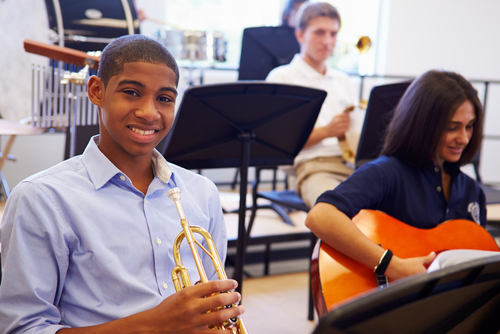
The social aspects of playing music were major reasons for continuing with musical activities
The feeling of overcoming a difficult skill to master, can be euphoric! What they learn about persistence translates into other aspects of their lives and shapes character and resilience. These are lessons that last a lifetime. Sports performances can tap into similar feelings. However, there is nothing like the experience of performing as part of a massed choir, concert band, brass band, school musical or orchestra. This is because the structure of reading music, playing the instrument (or singing) in complete sync with large numbers of musicians for large audiences, is exclusive to the pursuit of learning music.
Knowing this, over the holidays you can:
- Encourage them to play music with friends or family members. Invite friends over for music time with a performance for neighbours and family at the end of the designated time. It doesn’t matter what instrument they play (pots and pans are legitimate instruments in this context!) It doesn’t matter what musical genre that is performed. The key to this exercise is providing an encouraging and supportive environment for musical exploration.
- Book them into a music camp! There are many music camps occurring through the summer holidays. Even if you have missed the cut-off date for registrations, many camps will accept late entries (especially for less common instruments). Also look to the local branches of musical societies, like The Double Reed Society and The Clarisax forums. They often hold masterclasses and fun musical get-togethers for all ages.
- Younger children can be set the challenge to make a new musical instrument for fun and learn to play a tune on it to perform! Searching for ideas on the internet will reveal fantastic instruments made from everyday household items. These might include glasses of water, bells, metallic tubes and vegetables (try a carrot clarinet!)
- Listen to music regularly in the house and car. Share your favorite music with them and explain why you enjoy the music you love! Tell them the stories of the music you enjoy listening too. Tell them when you first heard it and how it makes you feel when you listen to it. Encourage them to share their favorite music with you. Ask them questions about it and listen to their experiences about how it makes them feel.
- Take them to see live musical shows. This could be a formal performance at a concert hall, informal theatre, busking or a free concert in the park. Exposing them to live musical performances is a way of signalling the importance of music.
- Researches found that the number of musical instruments and number of playback speakers in a household (eg stereo units) correlates to the engagement of young musicians. Ensure you have an easy and attainable way that your child can hear / see and experience music playback in your home! And ensure that you have accessible musical instruments at home like a tambourine, ulelele or carrot clarinet!
- Ensure they have the implements they need to practice and perform. Music stands, tuners, reeds, instrument stands and instrument maintenance items are important to support their growth and remove impediments to their learning.
- Ensure they have music to play! There are many free resources and low cost music subscriptions that can be found on the internet. You can look broader than music shops as well. Opportunity shops can be great places to find sheet music. Send out a message to relatives to look for music (explaining the level required). Encourage guests to bring gifts of sheet music with them for your young musical student where possible!
Encouraging your child to have musical peers is important. During secondary school a student is more likely to be influenced by peers. if they perceive that music playing is unusual, this can reduce their desire to play that instrument. For students of non-norm instruments like bassoon and oboe, connecting them to the local events with the Double reed society is a great idea. Encourage them to keep in touch with like-minded peers.
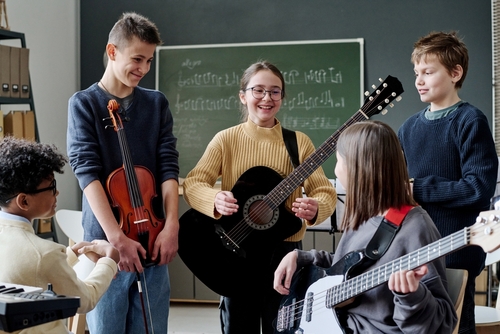
musical peers are important
- There is competition between music and other activities. For both genders, the older students grow, the more likely they will find ‘more important’ leisure activities. So its important to connect them with music as an important component of other leisure. For example, learning the music they hear in their computer games or favorite sports shows. Ensure that time and space is allowed in their schedules for music and make this non-negotiable.
- Practicing music is broader than working with the instrument. Practice can include ear training as well. The tenuto app is excellent for ear and rhythm training. You can look-up You Tube videos for them or sign them up to an online instrument learning platform. You can schedule time to do this together or get siblings, cousins and/or friends to connect together weekly (ideally in person or via video streaming). Schedule a reed-making tutorial with an experienced reed maker in your area.
- There will be some music teachers in your region who may work during the holiday season. They may be different to your regular teacher, and may even play a different instrument. But finding someone to guide your child in the holidays in ear training and rhythm will help grow their musical skills and keep them on track.
During the school year:
Ensure they have regular lessons: This is important to keeping them in music. After lessons ask them to teach you (or explain to you) what they learned during their lesson. This helps to give them some agency over their learning and students often enjoy teaching other people what they know.
Encourage regular practice: Setting a routine for regular home practice is essential. It should be an educational ritual as important as hand washing or teeth brushing. Setting up a reward system to keep them connected to the ritual could be necessary, although hopefully it just becomes a natural part of home life.
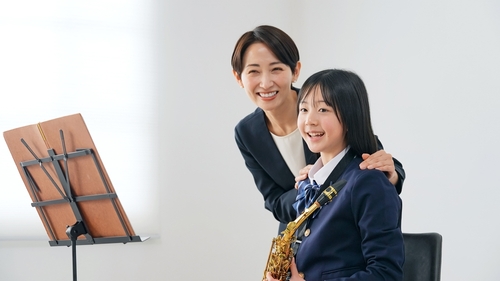
Ensure they have regular lessons and encourage them to practice!
Ensure that they are members of musical groups for their age and level. School bands and community youth music programs are a great source of music making with peers. Having musical fun together keeps them engaged!
Gender Differences
Studies show that boys lose interest in music gradually on a downward trajectory from the age of 10. This is because boys thought that it was more of a feminine activity and therefore less desirable. You can protect against this by connecting your boys with strong male music role models.
Boys also reported that they felt they had achieved their musical goals, which led them to lose interest in music. You can ensure they are aware and remain connected with new musical goals each year.
Conclusion
Research tells us that the older the child becomes the greater risk of dropping out of music. However, the more musical the home environment, the less risk of the child dropping out.
If we want to help children and adolescents stay musically engaged, we should focus on older children, especially those aged 15 years and older. Music teachers and instructors should assist parents to create a supportive musical home environment. It is also valuable to check in with children frequently to ascertain their engagement with musical activities.
Also, explaining how musical development takes place will help retain and motivate. Understanding that musicality is an ability that can be improved with practice will garner musical engagement.
With consistent application children and adolescents will improve at music, as with any new skill. Encourage them to continue to apply themselves even if they are unsure they will improve. Within a few months you’ll be able to help them reflect on the growth they’ve already gained and connect them with the future gains they will achieve in the coming weeks and months. Let them know they’ve got this! You have too!
Written by Jo Angus; Sweet Reeds.com
References:
Ruth N, Müllensiefen D. Survival of musical activities. When do young people stop making music? PLoS One. 2021.
- North AC, Hargreaves DJ, O’Neill SA. The importance of music to adolescents. Br J Educ Psychol. 2000.
- SOMM–Society of Music Merchants. Jahrbuch der Musikinstrumenten- und Musikequipmentbranche 2011/2012. [Yearbook of the music instruments and music equipment industry]. Berlin, Germany: SOMM; 2013.
- Creech A. Learning a musical instrument: The case for parental support. Music Education Research. 2010.
- Creech A, Hallam S. Learning a musical instrument: The influence of interpersonal interaction on outcomes for school-aged pupils. Psychology of Music. 2011
- McPherson GE, Davidson JW, Faulkner R. Music in our lives: Rethinking musical ability, development and identity. Oxford, UK: Oxford University Press; 2012.
- 6.Ng CHC, Hartwig K. Teachers’ perceptions of declining participation in school music. Research Studies in Music Education. 2011